- Larry Page has spent $180 million on Miami-area real estate in the past 90 days alone.
- California’s proposed 5% wealth tax targets roughly 200 individuals and aims to raise $100 billion annually.
- The tax applies to voting-share control, not just equity owned — a provision that could devastate startup founders.
- Four of the five richest people in the world now live in or are relocating to Florida.
- Silicon Valley insiders have launched a bipartisan “Save California” campaign to kill the measure.
Larry Page’s $180 Million Miami Shopping Spree
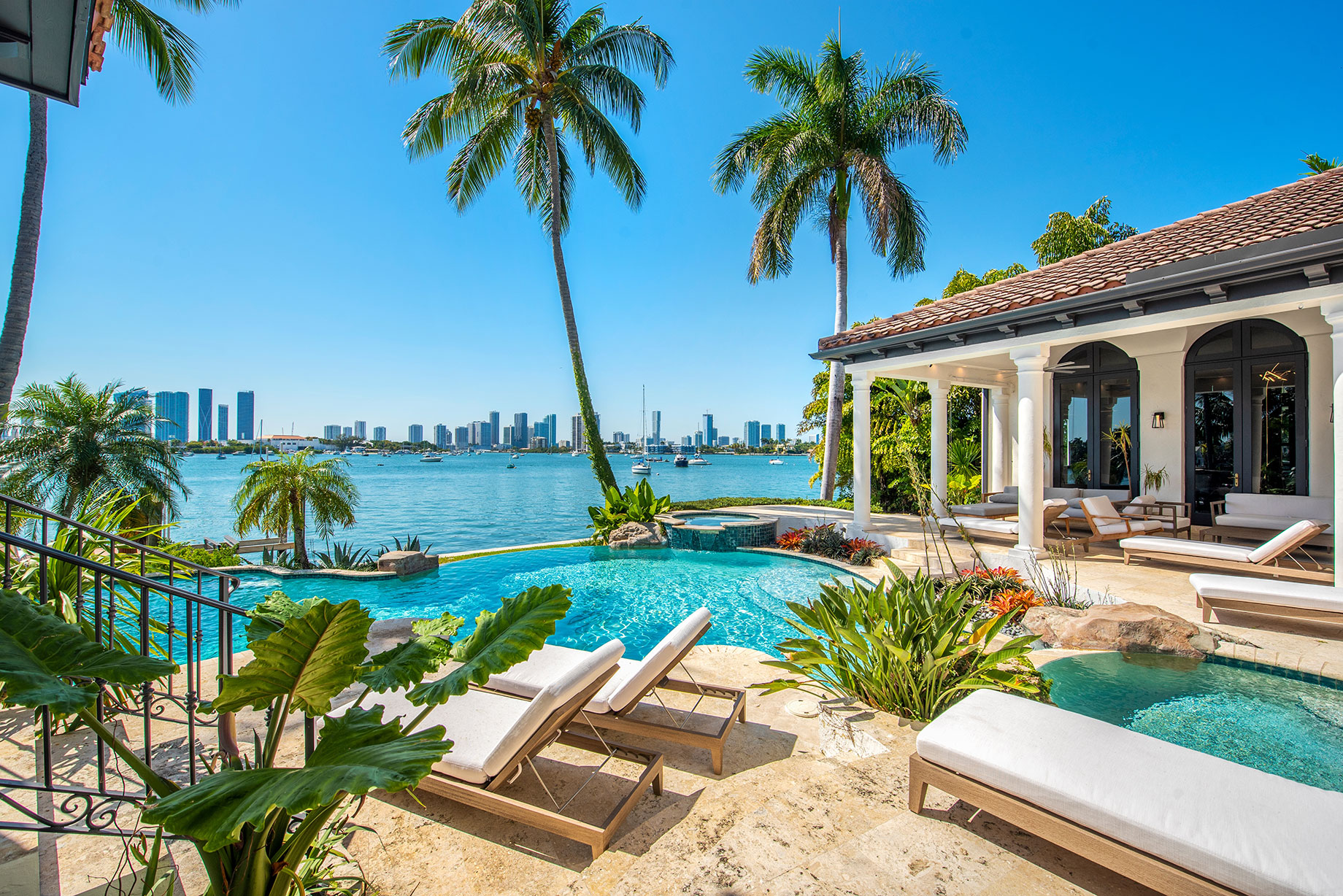
Google co-founder Larry Page has quietly spent $180 million on Miami-area properties since December, according to records reviewed by Business Insider. The purchases include a 2.5-acre waterfront compound on Indian Creek Island — the same ultra-private enclave where Jeff Bezos bought his $90 million estate in 2023 — and two adjacent parcels on Star Island.
Page isn’t alone. Four of the five wealthiest people on the planet now live in or are actively relocating to Florida. Bezos moved his primary residence to Miami in late 2023. Elon Musk shifted Tesla’s headquarters to Austin but has been spending increasing time at a newly purchased Miami penthouse. The common thread isn’t sunshine. It’s a proposed California wealth tax that has sent the state’s billionaire class into a panic.
The Tax That Triggered a Billionaire Exodus
California Assembly Bill 259, introduced in January by a coalition of progressive lawmakers backed by the state’s largest healthcare workers’ union, proposes a 5% annual tax on the net worth of residents with assets exceeding $1 billion. The bill targets roughly 200 individuals and projects $100 billion in annual revenue — money earmarked for affordable housing, public healthcare, and climate infrastructure.
The math is brutal. A billionaire worth $10 billion would owe $500 million per year. For someone like Mark Zuckerberg, whose net worth hovers around $210 billion, the annual bill would approach $10.5 billion. That’s not a rounding error. That’s a reason to move.
Governor Gavin Newsom has publicly opposed the measure, calling it “economically reckless” at a press conference last week. But the bill’s sponsors are pushing for a ballot initiative if the legislature stalls, betting that voters in a state with a $68 billion budget deficit will back taxing the ultra-rich.
Silicon Valley’s “Save California” Panic Room
Within days of AB 259’s introduction, a Signal group chat titled “Save California” appeared among the state’s tech elite. The group, first reported by TechCrunch, now includes over 80 founders, venture capitalists, and executives coordinating opposition to the bill. Members include Sequoia Capital’s Roelof Botha, Andreessen Horowitz co-founder Marc Andreessen, and former Google CEO Eric Schmidt.
Peter Thiel didn’t bother with the group chat. The Palantir co-founder announced in February that he was moving his personal office and primary residence from Los Angeles to Miami, calling California “a state that punishes success and rewards bureaucratic decay.” Thiel has already begun relocating Founders Fund staff to a new Miami Beach office.
The opposition isn’t just libertarian tech bros. Former California Governor Jerry Brown called the proposal “fiscal suicide” in an op-ed for the Sacramento Bee, warning it would trigger “the largest outflow of capital in American state history.” Polling from the Public Policy Institute of California shows 52% of likely voters support the tax — but that number drops to 41% when respondents are told it could cause billionaires to leave the state.
The Voting-Shares Trap Founders Didn’t See Coming
The provision that has Silicon Valley most alarmed isn’t the tax rate — it’s how wealth gets calculated. AB 259 taxes individuals based on the value of shares they control through voting rights, not just equity they own outright. For public company CEOs with dual-class stock structures, this is a nightmare.
A founder who owns 5% of a company’s equity but controls 51% of its voting shares would be taxed as if they owned 51%. TechCrunch reported that tax attorneys are warning Series B founders — people who are technically millionaires on paper but hold disproportionate voting control — that they could face tax bills exceeding their liquid assets.
“This isn’t a billionaire tax. It’s a founder tax,” said Garry Tan, president of Y Combinator, on X. “A 28-year-old who just raised a Series B at a $500 million valuation and holds supervoting shares would owe $25 million a year. That person doesn’t have $25 million.”
The bill’s authors say the voting-shares provision prevents billionaires from hiding wealth behind complex corporate structures. Critics say it fundamentally misunderstands how startup equity works.
Florida Wins by Doing Nothing
Florida doesn’t need to recruit California’s billionaires. It just needs to exist. The state has no income tax, no capital gains tax, and a constitutional amendment that prohibits the legislature from ever imposing one. For a billionaire facing a $500 million annual wealth tax in California, the move to Miami is the most profitable real estate transaction of their life.
The results are already visible. Miami-Dade County recorded $4.2 billion in luxury real estate transactions above $10 million in the first two months of 2026, up 340% from the same period last year, according to Douglas Elliman. Indian Creek Island, once a sleepy enclave of old-money retirees, now hosts three of the ten wealthiest people on Earth.
California still has the talent, the universities, and the infrastructure. But it may no longer have the billionaires willing to pay for them. As one venture capitalist in the Signal group put it: “Sacramento is about to find out what happens when you try to tax people who can afford to leave.”