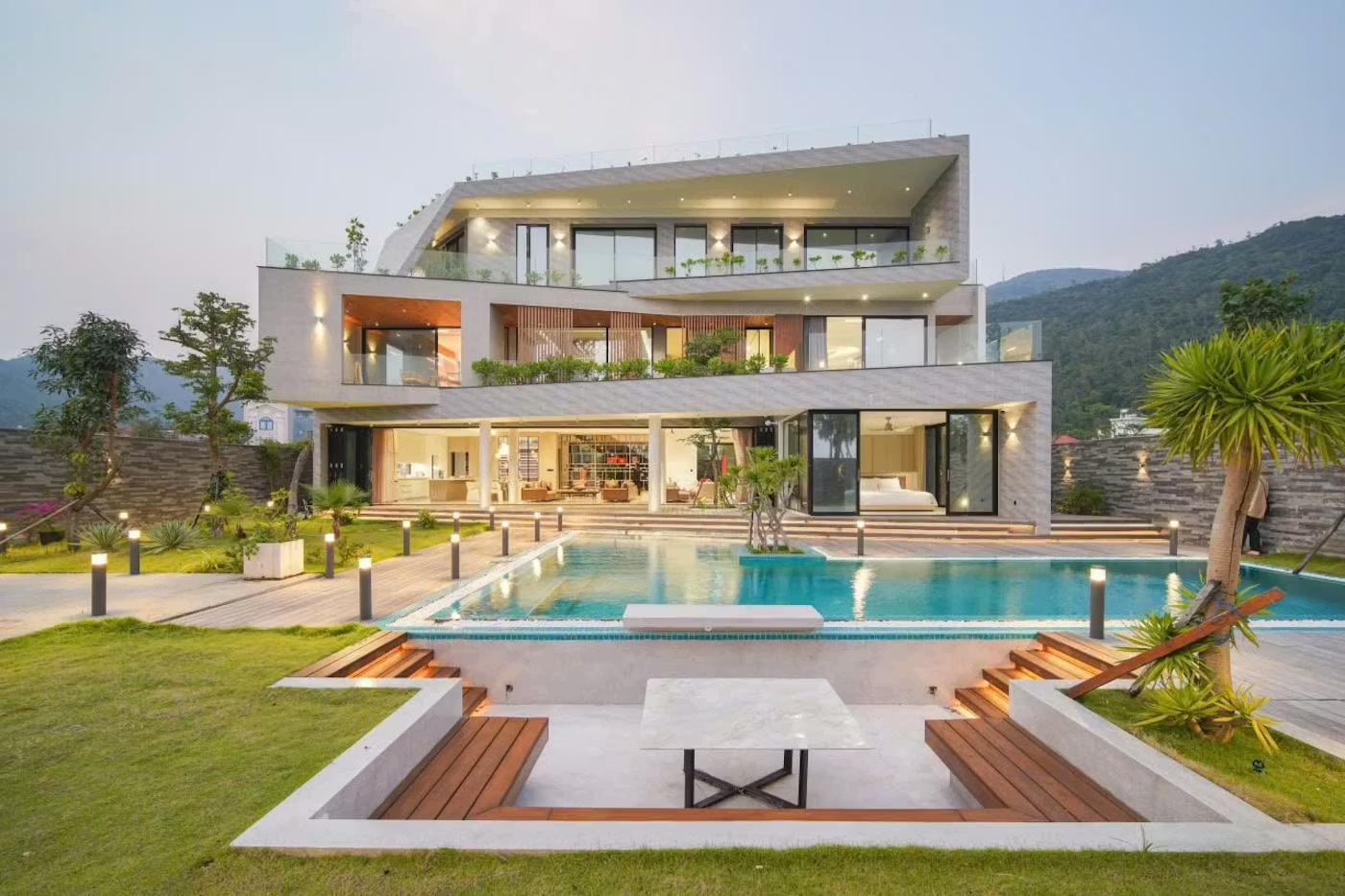
- Uneed founder Thomas Sanlis announces 14 participants for the platform’s inaugural residency, running May 26 to June 2 in Nantes, France.
- The batch includes builders from France, Italy, Ukraine, and Poland, working on projects spanning Threads scheduling, anxiety management apps, and screenshot APIs.
- Two sponsors — Fload and Creem — fund the event at €5,000 per slot, with one sponsorship spot still open.
- The format draws directly from the hacker residency model that gained traction in Da Nang, Vietnam.
14 Builders, One Manor, One Week
Thomas Sanlis, founder of product launch platform Uneed, revealed the full participant list for the first-ever Uneed Residency. Fourteen entrepreneurs will spend a week living and working together in a 400-square-meter 19th-century manor just 10 minutes from Nantes train station, from May 26 to June 2.
It’s happening. Here are the participants for the first batch of the Uneed Residency 💥
— Thomas Sanlis 🥐 (@T_Zahil) March 3, 2026
But all of this wouldn’t be possible without our 2 sponsors:
🏆 Fload.com, one of the most impressive projects I’ve seen in the past few months: an AI employee for your mobile apps.
🏆 @creem_io, the best platform to sell your products online!
Applications are closed, and every bedroom in the 11-room manor is spoken for. The concept is deliberately simple: no keynotes, no panels, no corporate agenda. Just builders working on their own projects under the same roof, exchanging feedback, and documenting the entire experience on social media.
The Projects: From Chrome Extensions to Mobile Empires
The batch reads like a cross-section of the indie hacker economy. Luca and Mattia will grow BlackTwist, their Threads scheduling tool. Soraia, a developer building under the handle @SoraiaDev, is creating MiroMiro — a Chrome extension that copies any website’s design in one click. Marina brings Luma, an anxiety and stress management app built on science-backed exercises.
Dmytro Krasun arrives with ScreenshotOne, a screenshots API already generating revenue. Pauline — who Sanlis predicts will “reach $2 million MRR before everyone” — is juggling multiple projects including Feedbask and IAcrea. Filip and Emanuele are working on what Sanlis calls a “mobile apps empire,” and Nicolas Papegaey is building one of his own.
Hugo Lassiege, co-organizer of the residency, will work on Writizzy, a blogging platform he co-founded with Sanlis. Benjamin Code — a figure well-known in the French tech community with a massive YouTube following — brings meetsponsors and AutoTrim to the villa. Dmytro Bavykin and Alexandra round out the batch with SimplePoo and a stealth project. Maxence, who builds in public under @MaxInPublic, will be working on Bep.
A 19th-Century Manor as Coworking Space
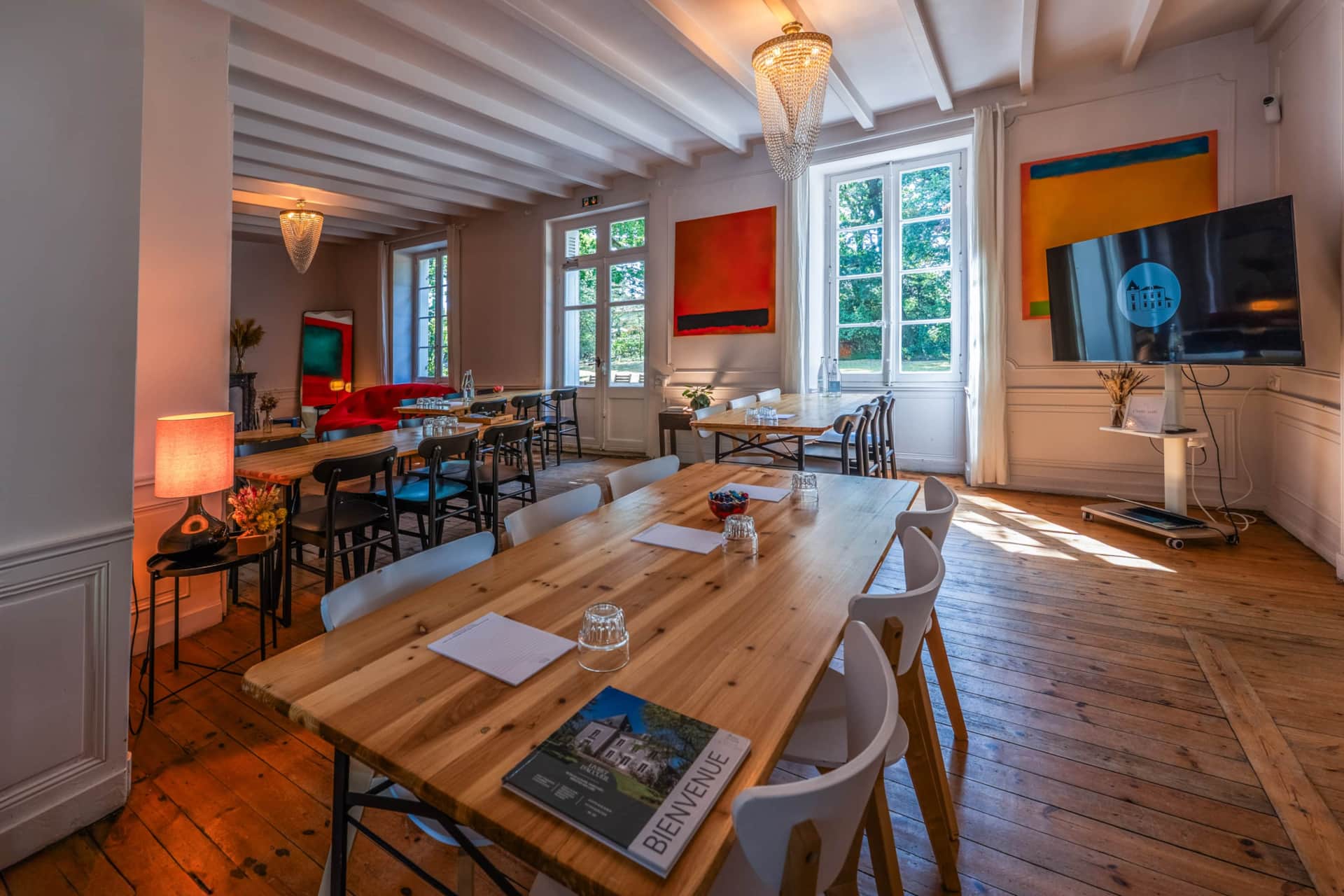
The venue is not a WeWork. It is a manor built in the 1800s, set in a park just outside Nantes city center. The property spans 11 bedrooms, 10 bathrooms, 75 square meters of connected lounges, a 60-square-meter dining room with seating for 20, and a modern kitchen with a solid chestnut island.
Outside, there is a Nordic bath for eight, two pétanque courts, and a terrace overlooking the grounds. Accommodation and meals are included for all participants — funded entirely by sponsorships.
Two Sponsors In, One Spot Left
The residency runs on a lean sponsorship model: three slots at €5,000 each. Two are filled. Fload, an AI employee platform for mobile apps, and Creem, a merchant-of-record platform with what Sanlis describes as “the lowest fees on the market,” are the inaugural backers.
Each sponsor gets full villa access for the week, a private bedroom, the option to host a talk or workshop, and continuous visibility across participant content and livestreams. One spot remains.
The pitch to sponsors is straightforward: every participant is an active entrepreneur with a real audience who tests, adopts, and recommends products daily. The exposure is not a logo on a lanyard. It is woven into a week of organic content creation across X, LinkedIn, YouTube, and blogs.
A Format Forged in Da Nang
The Uneed Residency draws direct inspiration from the hacker residency wave that emerged in Southeast Asia. In late 2025, developer Travis Fischer partnered with Vietnamese indie hackers Tony Dinh and Minh-Phuc Tran for a month-long residency in Da Nang — a program that put the co-living builder format on the map and generated hundreds of posts across the indie hacker community.
Sanlis is adapting the model for Europe: shorter at one week instead of a month, sponsor-funded, and rooted in the community he has spent six years building through Uneed. The platform, an independent alternative to Product Hunt, crossed $135,000 in revenue and one million visitors in 2025.
“In the coming weeks, I’ll share an interview with every resident,” Sanlis wrote. The residency is still three months away, and the content machine is already running.